Showing posts with label Jill Adams. Show all posts

Friday, May 29, 2015

Figuring Out Cooler Liners

This time of year is perfect for thinking about coolers. They make a great gift for customers and employees. In addition, anyone receiving a cooler will invariably hold onto it, making it a lasting marketing presence.

When looking at various types of coolers, you'll notice there are several different types of liners. To help clear some of the confusion, here's a short chart on the differences:


Heat Sealed Liner:  These provide a leak-resistant barrier and are able to hold water. Not recommended for loose ice as it can misshape and tear a soft liner. Usually made of PEVA, a non-toxic vinyl which has been replacing the use of PVC.

Silver Foil Liner:  Sometimes referred to as a thermo-liner, this is good for warm and cold items, but is not leak proof. Usually the least expensive of the liner types.

Hard Plastic Removable Liner:  A good choice for convenient cleaning and for using loose ice.

Clear Plastic Removable Liner:  A soft, leakproof liner which can be removed for easier cleaning.


To best insulate your items in a cooler, follow these tips:


  • Keep your cooler out of the sun.
  • Keep the cooler off the ground as it can absorb the ground heat and transfer it to the contents.
  • Pack items tightly inside the cooler to minimize air circulation which can warm the contents.
  • Always keep the cooler closed when not in use.


Friday, April 3, 2015

Keepin' It Cool - What Type of Coolie Works Best?

Confused about the types of beverage insulators out there? Wonder what's the difference between scuba and neoprene? Wonder why they call it scuba when diving suits are made out of neoprene?

Here's a quick rundown on the types of coolie materials commonly used:


Scuba: Open cell polyurethane foam with a polyester fabric on one side and tricot on the other.

Neoprene: Closed cell rubber-based product with polyester or nylon fabric on both sides.

The photo shows the scuba on the left, neoprene on the right.

Now, what does that mean? In a nutshell, open cell has more air pockets and is thus, less insulating. Since closed cell is much denser, it blocks transfer of heat much better, keeping your beverage cooler for longer.

So why choose scuba over neoprene? Price. It was developed as a cheaper alternative to neoprene, but the tradeoff is it won't insulate as well.

So when choosing an insulator, the decision is yours – less expensive, but won't perform as well, or spend a little more for a better product.

Monday, March 16, 2015

Umbrellas 101

It's that rainy time of year coming up, and the perfect time to think about umbrellas as marketing tools. Whether it's for golf outings or personal use, umbrellas can't be beat for the length of time the recipient will hold onto them and the marketing exposure they offer.

When in the market for umbrellas, the following things should be kept in mind:

Stick or Folding:
Stick umbrellas are much stronger than folding ones. Each joint in a folding umbrella which allows you to fold it down creates a point of weakness. You sacrifice strength for convenience.

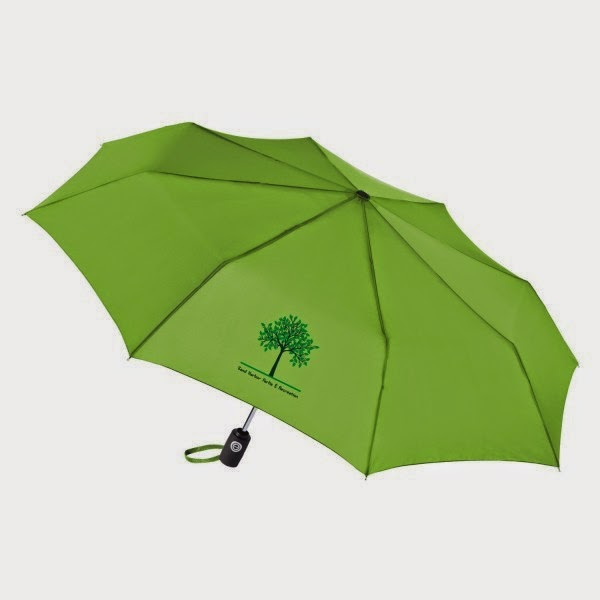
Click here to view our favorite folding umbrella - Totes Auto Open/Close Umbrella

Ribs and Frame:
The ribs of an umbrella are the rods which spread out and attach to the canopy. Coated ribs will better protect against rust and corrosion. The ribs and frame are usually made up of aluminum, steel or fiberglass. Aluminum is the least expensive, but also the most likely to break and bend. Steel, while much stronger, is more rigid and can break at the rivets in a strong wind. Fiberglass, though pricier, is stronger and flexible, making it better able to handle very strong gusts.

Vented Canopy:
A vented canopy, or double canopy, is common on golf umbrellas due to their normally larger arc size. The vent allows wind to pass through the canopy rather than invert it. Some smaller umbrellas are now available vented.

The Gustbuster is the umbrella of choice for touring pros. It can withstand up to 60mph gusts without inverting. It also comes with a lifetime warranty. Check out more details here:  GUSTBUSTER


Fiberglass or Metal:
As discussed above, fiberglass offers more flexibility in wind gusts, decreasing the chances of damage to the umbrella. Another advantage of fiberglass is that it does not conduct electricity, making it much safer in a lightning storm.


Some fast facts about umbrellas:

  • average imprint area is 7"x5" and can go up to the entire umbrella canopy -- great advertising space!
  • golf outings are perfect for umbrellas - cheaper than golf balls and don't end up at the bottom of the lake!
  • great item for gift with purchase
  • rule of thumb:  everyone needs at least 3 umbrellas - it's a personal accessory
  • perfect appreciation gift - the recipient will hold on to it for years

Friday, September 27, 2013

2013 Best Boss Award – PPB Magazine

I was surprised to open my email about a month ago and find that I had been selected as one of 2013 Best Boss Awards by Promotional Products Business magazine.

We truly have a special group of people here at The Creative J. Without the dedication and caring they all give to me and each other, what we do and how well we do it certainly would not be possible. I am forever grateful to all of them for their continued support and all the FUN we have working together each day. Thank you – Val, Rachel, Risa, Lindsey & Jeff – for everything you have done and are for me!

To read more about this and the common themes they found with the 2013 award recipients, click here:  2013 PPB Best Boss Awards – Top Secrets of Savvy Supervisors.


Tuesday, June 18, 2013

Creative Bag Imprinting Ideas

Bags are a common promotional item businesses are buying these days. Be it die cut plastic bags, recyclable grocery bags, coolers or totes, you see them everywhere you go. And because they are an item that gets used and reused, it's a great advertising vehicle for your logo.

But, problem is, since you do see them everywhere, we tend to not pay attention to them as much since most bags utilize the most basic decorating – a one color imprint centered on the front panel.

To really help your message and your brand stand out, how about trying some more creative and unique decorating methods? With just a little creative twist, what was once a plain looking bag will now stand out and help show off your brand.

So here's just a few ideas on how you can make your next bag project unique:


Full Color Imprinting:

Going from a simple one color imprint to a full color logo or even photo, can make a big impact. Look at these two examples – which one demands more attention? Upgrading to a full color doesn't always add a lot to the price of the item either. In most cases, it's just a bit over $1 with no additional set up charges.

In addition, by utilizing a full color imprint, you've just opened the possibilities for imprint content. How about a map of the event? Or, a schedule of events? Photos of your product? The possibilities are endless and you've created a marketing piece that really promotes  your brand or product, instead of just displaying your logo.


Custom Design

If you've got a large quantity (minimums vary, but usually over 3000 pieces), the opportunity for a completely unique and custom design is wide open. All aspects of the bag can be designed from scratch and present a great way to really stand out. From selecting materials to imprint colors and locations, the options are endless. It's a great way to create a bag that will be memorable and will be used time and time again, presenting your message each time it's used.


Unique Imprint Locations

Another option for a unique look is to place your imprint in non-standard locations. Depending on the bag supplier, your options may include handle imprints, imprinting inside the bag and on the gussets. Combining multiple imprints and locations on the same bag can truly provide a custom look.


These are just a few ideas for getting creative with bags. If you've got an occasion coming up where a bag is part of your marketing plans, give us a call and we'll present you with some creative, custom ideas that will make your bag get noticed.

Monday, June 3, 2013

Price Drops on Sanmar District Line

Sanmar, a leading clothing wholesaler to our industry, has just announced price drops on it's District® and District Made® lines, at an average of 15%. The District® line features apparel with a trimmer cut and shorter sleeves, while the District Made® line features a more relaxed fit with longer sleeves.

At The Creative J we're really excited to see this price drop as it will allow us to offer our customers some newer more fashion forward styles at an even better price point.


Microburn Junior's Raglan Tee
In addition, Sanmar has introduced a dozen new fabrics including Microburn™, an aged-looking fabric that has a weathered look and feel. Available in a variety of colors and styles, it's soft feel can't be beat.

Microburn Men's Crew Tee
Men's Dip Dye Crew Tee
Another addition, the Dip Dye, offers shirts with graduated color variations which are so popular today.  In both men's and ladies versions, this is a great option for company tshirts with a little pizzazz.
Ladies Dip Dye
Rounded Deep V-Neck Tee

View more of the latest styles from Sanmar, click here to go to view the District® & District Made® lines. 

For pricing on these or other decorated apparel, contact one of our knowledgeable specialists here at The Creative J. 

Friday, May 3, 2013

Heat Seal Decorating

Everyone's used embroidery for decorating polos, bags, jackets and other items, but have you ever considered, or even heard of heat seal as an alternative?

At first listen, heat seal may conjure up memories of tshirt imprinting of the past – those thick, plasticy transfer imprints that would crack and peel over time. Today's heat seal or transfers are much more durable and offer a variety of materials.

Heat seal is an excellent option for full-color graphics with great detail. If you've got a complicated logo or one with many colors, digital heat seal transfers are a very cost effective solution. Often heat transfer can be a less expensive option than embroidery, especially for imprints with lots of detail or solidly-filled areas.

Transfers are usually digitally printed on a transfer paper or onto printable heat transfer material which is then heat sealed or pressed to the fabric. Photo-quality images can be reproduced for unlimited options.

In addition, since the transfers can be applied to practically any location on an item (as long as it can lie flat), the options are endless for a more creative approach to decorating.

Locations
Consider these ideas for imprint locations:  pockets, hem, collar, upper back shoulder, sides, trim areas, or shoulder tops. You are only limited by the ability to lay the heat transfer flat for pressing.

Materials
There are a variety of heat seal materials available such as glitter, reflective, rhinestones, sequins, foil, felt, and twill.

Ask about using heat seal decoration as an option on your next apparel project. We'll brainstorm with you to come up with some unique and creative ways to make your apparel stand out from the rest of the crowd.


Wednesday, April 3, 2013

Cotton Prices on the Rise...Again

An article released today by www.business-standard.com details the rise of cotton prices over the past two months. Apparel manufacturers were waiting to see if prices would fall or stabilize, but instead, have seen an upward tick in pricing, causing them to consider 10-15% increases to apparel.

In the promotional products business, we see the effects of such price increases mainly in the week-to-week costs of tshirts. Tshirts are considered a commodity item, and pricing can fluctuate wildly when cotton pricing is unstable. This can cause it to be extremely difficult to hold pricing on quotes for longer than a week or two.

At The Creative J, we have many sources for our blank apparel, which help us to keep your costs down. When quoting apparel pricing, we search through a multitude of vendors to find the best current pricing so we can pass the savings on to our customers. You can be assured that the price we quote has been thoroughly researched by the time it reaches your eyes.

Click here to read more about the current cotton situation.


Friday, March 8, 2013

Make it Soft to the Touch

Tshirts have become an integral part of today's fashions, and a common item for companies to advertise or promote their business or brand. One of the popular trends in tshirt design is to use softer materials and imprinting methods that are soft to the touch. The goal is to have an imprint that doesn't feel like a plastic sticker, but retains the softness of the material as much as possible.

At The Creative J, we have numerous imprinting and decorating techniques available which gives us the ability to offer our customers unique and memorable ways to design their apparel. To achieve an imprint which retains that soft, almost worn feel, even when the design covers a lot of area, there are three main methods to use. Below are some of the options and details about each:


No Underbase

Using regular Plastisol inks without an underbase can achieve a more worn look with a slightly softer feel.

Final Appearance
Depending on the color of the shirt and the ink colors being used, the imprint can have a vintage/worn look with a slightly softer feel since there is not a layer of white underneath. There will still be a detectable imprint to the touch.

Detail
Imprints will retain their detail within the limits of standard screenprinting.

Cost
Either the same or a bit less in some cases than standard printing.

Minimum Quantities
No restrictions other than those for standard printing (usually 12, depending on imprint colors and locations)


Fashion Base

An additive is mixed with regular Plastisol inks to achieve a softer feel. After washing the shirt, you won't be able to feel the imprint.

Final Appearance
The imprint will have a more transparent, washed-out look, which will allow the color of the shirt to show through. For this reason, printing a dark imprint on a dark shirt will not work as well since the shirt color will overtake the imprint color. However, if printing a lighter color on a dark shirt, the imprint will have the worn, distressed look of a vintage tshirt.


Fashion Base Print
Detail
Since Plastisol inks hold good detail, imprints will retain their detail in finer areas.

Cost
A bit more per imprint color and placement than standard inks, but still an affordable option.

Minimum Quantities
Since inks need to be specially mixed and cannot be saved for later use, there is a minimum of 48 pieces.


Water Base Inks

These inks have a softer hand to them then standard Plastisol inks and has a softer look to the imprint also (colors will not be as bright).

Final Appearance
The imprint will be a bit more transparent than standard inks and does not print well on white underbases, so works best on white or light colors. Pantone colors will appear a bit lighter than they appear in color books, so if you want bright, vibrant colors, waterbase is not the direction to go. 

Detail
Since the ink has a tendency to dry more quickly, there can be a loss of detail in some fine areas.

Cost
Usually no extra cost to run waterbased inks.

Minimum Quantities
No higher minimums than standard printing.


Discharge Ink

Discharge ink is the process and waterbased ink used for dark garments. It's extremely soft when compared to standard inks. It uses a chemical which bleaches the dye from the garment before depositing the ink pigment on the material.


Final Appearance
After washing, the imprint will feel just like the garment's material. Imprint colors can be vibrant since the garment color does not show through the ink. Only SOME 100% cotton garments will work for this process. Some rich colors such as royal blue, red, purple, etc. can be very unpredictable as the inks can become contaminated by the shirt dye. When used on the right type of garment, it has a wonderfully soft and vibrant appearance.

Detail
Since these are waterbased inks, fine details may appear soft or fill in some due to drying issues.

Cost
Due to the special mixing of inks with chemicals, they must be used right after mixing. In addition, the chemicals tend to break down the screens, which depending on the size of the order, can require additional screens. Therefore, the cost for discharge is much higher than standard inks. You can figure an extra $.60-$.75 per imprint color, per location for discharge.

Minimum Quantities
Due to the factors above, discharge printing using requires a minimum of 72 pieces or more.


Using the methods above, along with other techniques and decoration methods, we can help you to create a tshirt design that will stand out from the rest. 

Monday, March 4, 2013

CPSIA and Child Safe Products


For the past year, manufacturers and importers of consumer products have been required to show proof of compliance with third-party testing for lead in children's products. These new regulations are commonly referred to as CPSIA (Consumer Product Safety Improvement Act) This impacts the promotional product industry since many promo products are intended for or handled by children. It's important to be aware of these regulations as they pertain to the marketing items you chose for your promos.

What is Defined as a Child''s Product?
Basically anything designed or intended for use by children under 12 fall under these regulations. However, this definition can get a bit sticky. Some items although not necessarily intended for children, may fall under this regulation due to the imprint placed on the item. For example, if you decorate a water bottle with a fun cartoon, then it can be determined to fall under this regulation. That same water bottle with a company logo on it can be exempt.

What About Items Not Intended for Children?
Items not intended for children, but handled by them, are exempt from the testing requirements. It is only if the items primary target audience is children under 12 that the requirements come into play. 

What Products are Deemed Safe?
Products which have passed the testing guidelines for CPSIA will have proper labeling  and test results. Most manufacturers are now including these reports on their websites. Products which are deemed child safe will also have a tracking label directly on the product. Again, the gray area of this issue is on products which before decorated are not considered to be children's products, but after decoration are. These items may not have gone though the testing process.

For a more in-depth explanation of this issue, read this article provided by the Promotional Products Association:  click here.

To view how some of our favorite suppliers comply with these regulations, check out their compliance pages:


A good rule of thumb for any promos you purchase for your marketing efforts:  Take a couple minutes to review the audience which will be receiving your items to determine if children are part of that audience. Then take a few moments to review the items to see if any of them appear to be intended for children, or appeal to children. The last thing you want in your marketing campaign is to hand out an item which could be potentially dangerous to a child.

Thursday, February 7, 2013

Not Just for Lips

Sure you can use lip balm to keep your lips smooth and unchapped, but did you realize there's more uses for it?

Protect Your Face
Rub some lip balm on your face for a great barrier between your skin and whatever you want to protect it from -- whether it be wind or hair dye.

Remove a stuck ring

No need to pull and tug on your finger to try to remove that stuck ring. Just coat the finger with lip balm and gently wriggle the ring loose.

Groom wild eyebrows
Use lip balm as a styling wax to groom unruly mustaches, eyebrows, or other wild hairs.

Zap bleeding from shaving cuts
You just cut yourself shaving and you’ve no time to spare. Just dab a bit of lip balm directly onto the nick and the bleeding from most shaving cuts will quickly stop.

Lubricate a zipper
Rub a small amount of lip balm up and down the teeth of a sticky or stuck zipper. Then zip and unzip it a few times. The lip balm will act as a lubricant to make the zipper work smoothly.

Make pounding nails easier
Rub some lip balm over nails and screws being drilled or pounded into wood. The lip balm will help them slide in a little easier.

Keep a lightbulb from sticking
Outdoor lightbulbs, which are exposed to the elements, often get stuck in place and become hard to remove. Before screwing a lightbulb into an outdoor socket, coat the threads on the bulb with lip balm. This will prevent sticking and make removal easier.

Make drawers slide easier
Apply lip balm to the tracks of drawers and windows, or to the ridges on a medicine cabinet, for easier opening and shutting.

Shine your shoes
Rub a bit of lip balm on your shoes and buff with a dry washcloth for a quick and easy shoe shine.

Keep your shoes tied
Coat the part of the shoestring that you loop with lip balm to keep them from coming undone.


For Better Lip Service


As of December 2012, the FDA is now requiring new labeling to be included on lip balms. Due to this, there has been a slight increase in prices, as well as some new formulations. Lip balms can contain a variety of ingredients, some considered good, some considered not so good by some. Here's a quick rundown on some of the more common:

UVA/UVB Testing Requirements
UVA & UVB are forms of ultraviolet radiation which cause sunburns, and both have been linked to causing skin cancer. Lip balms which protect against both types of radiation are now labeled as "Broad Spectrum" sunscreen.

Oxybenzone
Oxybenzone has been a common chemical sunscreen used in products since 1978. However, some toxicology experts believe it is absorbed through the skin and is linked to hormonal disruption which can possibly lead to skin cancer. Some manufacturers are starting to replace it with another chemical, Octisalate, which does not have the possible hazardous effects of Oxybenzone.

Beeswax, Petrolatum, & Parabens
Petroleum(petrolatum) helps moisturize, but does not treat dryness. It's a temporary fix. Beeswax is a naturally healing antiseptic emollient which has a less sticky feel than petrolatum. Parabens are often used instead of beeswax and have been found in some studies to disrupt normal hormone function.

Menthol, Camphor, Phenol
Commonly found in balms, these can actually lead to dryness, irritation and/or peeling skin -- not exactly what you want on your lips!  Phenol is actually a substitute for formaldehyde, an embalming fluid. Again, not exactly something you want on your lips!

Natural Balms
If concern about chemicals is an issue, opt to choose natural lip balms which do not contain sunscreen. These lip balms use all natural ingredients for moisturizing lips, including coconut, jojoba, hemp, olive and sunflower oils and/or shea butter. Although they don't protect against sunburn, they do an excellent job of moisturizing and preventing chapped lips.


When it comes to lip balms, we have many options to help you choose the formulation and price that fits your marketing plan. Keep in mind that although natural or organic formulations may cost a little more, the benefits can outweigh the cost when compared to the less expensive options. A good quality lip balm is an excellent promotional item that will be used and remembered for a long time.


Tuesday, January 15, 2013

Seriously, We're Certified!


We're info junkies here at The Creative J. I have never seen a staff so committed to learning and researching than we have here. Whether it's learning the latest in apparel decorating techniques, researching how much weight a bag will hold, or testing the quality of a pen, our staff is constantly striving to provide our customers with the information necessary to make informed decisions.

Part of our learning quest is to become fully certified specialists in our industry. Did you know there is a certification process for promotional product distributors? By attending various classes, seminars and educational events, certification can be earned through our international industry association, PPAI (Promotional Products Association International).

Currently, we have two staff members who have received their T.A.S. designations (Trained Advertising Specialist), with the rest of our staff working to attain their certifications this year. Over 25 credits of industry training was completed in order to receive these certifications. 

Classes include subjects spanning a range of topics covering the promotional products industry – everything from ethics and proper business practices, to artwork and decoration techniques, to product safety and compliance.

And, we are not stopping there! Our next step is to receive the C.A.S. certification, a process which requires over 75 credits and at least 3 years experience in the industry. 

So why should you use a certified promotional products consultant for your promotional marketing? Easy! We have the best knowledge to help guide you in making the right decisions for marketing your company or brand. We can advise you on a variety of things such as what items and artwork will imprint best, what products or suppliers are the quality you need, and how to make the most of your budget. Once you work with us,  you'll see how we can make the entire process much simpler for you by allowing us to do the legwork and research. We know what works, and what has failed. We know how important it is to make sure the products you receive will work for your marketing purposes.

We're not just sales people, we're true consultants. We're here to help you reach your marketing goals, solve problems, and find the best possible way for you to present your brand – which is a reflection of yourself.

If you'd like to read more about why using a professional promotional product consultant is a great thing, just click here:  Why Use a Consultant?

Tuesday, July 3, 2012

Tumblers 101


We've all seen those popular tumblers – you know, the ones that are usually acrylic with a screw-on lid and straw? 

Did you ever wonder what the difference is between the price points you see and the product materials? 

Well, even if you didn't wonder, here's a quick run-down on what to look for when shopping for tumblers!


Material
Tumblers are made in a variety of materials, which leads to the wide price ranges you find them advertised. Keep in mind that a very low cost tumbler may be made of materials that don't hold up well and will warp or chip easily.

Polypropylene - this is the low-cost alternative to the other available materials. Normally these tumblers will have a snap on lid and the material is softer and more flexible than the others. It also does not hold up in the high heat of a dishwasher and will warp.
16oz Price Range:  $1.89 - $2.50

Acrylic - a strong, clear material, but still prone to chipping if dropped, but is less prone to scratching than polycarbonate. 16oz Price Range:  $2.99 - $4.50


Polycarbonate - the biggest item to note on polycarbonates is that they contain BPA - a chemical which can be toxic. Most manufacturers have quit making drinkware using polycarbonate due to this. Polycarbonate is extremely resistant to breakage and is often marketed as "unbreakable." However, it is easy to scratch and will yellow over time.16oz Price Range:  Generally not available due to BPA issues


SAN - this plastic is an acrylic blend and is more stable and durable for hot and cold liquids as compared to acrylic. Acrylic can craze when switching between extreme temps, while SAN will not. 16oz Price Range:  $5.50 - $7.50


Tritan™ - this newer material offers clear advantages over polycarbonate and other materials. It's BPA free, won't add odor or taste to liquids, is dishwasher safe, resists degradation, cracking and has great clarity. It is, however, the most expensive option.16oz Price Range:  $8.50 - $10.50


Double or Single Wall
Single wall tumblers will be less expensive, but you trade cost for performance. With a double wall tumbler, you add more insulation, keeping your drink cooler, longer, while also preventing the walls from sweating when ice or very cold drinks are used. If you've ever had a drink sweat and drip on your desk, you'll know why double wall tumblers are much nicer to use.

The Creative J staff can help you navigate through all the intricacies of drinkware. Just give us a call and we'll help you find the perfect tumbler for your budget and needs. 


Monday, April 16, 2012

The Perfect Spatula

Every once in awhile we come across a product that we just love, and this was one of those items.

The Lift It Spatula - check it out here.


Ok, so it's a spatula, you say. But wait, it's more!

Not only is it a nice, heavy-duty, substantial spatula, but it has a nifty little feature that keeps it off your countertop, leaving no messes! I used it this weekend and loved the fact that I could set it down without getting any grease or mess on my counters.

Also, it comes in 12 great colors, the imprint area is large enough for a substantial imprint, it can withstand temps up to 375, and, it just looks great.

There's also a coordinating spoon and pasta server too if you'd like to make a complete set. They can be polybagged together for easy distribution.


"But why in the world would I want kitchen utensils for a promo?", you ask?

 Simple – these items will stay in the recipient's kitchen drawer for years to come. And everytime they use them, they'll immediately be reminded of who gave it to them. That's advertising that will last a whole lot longer than a pen that dries out or a sticky note that gets thrown out.

And isn't that exactly what you want a promo to do - remind the recipient long term about your brand?

Thursday, October 27, 2011

Not Just for Pandas Anymore

Bamboo has popped up in the past couple years as a very popular, eco-friendly material in a lot of different items. Bamboo is a renewable resource which grows rapidly and is harvested with little impact to the environment, making it a good alternative to hard woods such as maple.

In the promotional product industry, we are seeing bamboo used in a variety of items, from clothing to cutting boards.

In cutting boards, bamboo makes a great choice since it is lightweight, yet durable and strong. Cutting with a knife on bamboo board helps prevent dulling since bamboo doesn't cause friction with the blade like hardwood or plastic boards will. Since bamboo is so strong, it also allows for heavy duty cutting without the worry of shattering or splintering the board.

In addition, bamboo is a bacteria inhibitor. The board surface is very compact, without indentations or grooves which commonly harbor bacteria in other wood boards. All types of foods can be cut on bamboo boards. Cleaning bamboo boards is also easy and care-free. They are less prone to warping or splinting since they absorb little moisture.

Fabrics made from bamboo also offer some great benefits. The fibers contain channels which help absorb moisture, wicking it away from the skin, leaving the wearer cool and dry. Bamboo fabric also will have a soft smooth feel making it a very comfortable fabric to wear. And on the practical side, it can be machine washed and dried.

If you're interested in using promotions that are eco-friendly, stylish and practical, ask about bamboo items the next time you call.

Tuesday, October 18, 2011

What the heck is GSM, or How Good is My Tote?

GSM is a term you'll see a lot when looking at and ordering non-woven bags. You know, those recycled/recyclable grocery totes you see everywhere.

GSM stands for Grams per Square Meter and measures the density of polypropylene material. The higher the GSM, the more dense, strong and durable the material.

Most bags in this industry will measure between 70 and 100 GSM. There is a definite difference between weights on either end of the spectrum. You'll be able to feel the difference between a 70 and a 100.

Keep in mind too that GSM measures the density, but not necessarily the quality of the material. Some polypro materials might contain fillers which will bring down the cost, but will also reduce the quality and strength of the material. The country of origin can also play a role in the quality as material produced in Europe tends to be of better quality than those produced in China.

Another issue to consider is stitch count. While traditionally, you might think that the higher the stitch count, the higher the quality, when it comes to polypro bags, it's actually the opposite. Imagine the polypro material as a sheet of plastic. Each time a needle enters the material, it makes a hole. If the holes are too close together, the material can rip. Look for a stitch count of 6 stitches/inch for optimal integrity.

When it comes to ordering non-woven totes or grocery bags, we prefer to use our suppliers who carry products with 80GSM or higher values. For best quality, we also like to stick with our supplier that has many products with 100GSM and sources their materials from German-manufactured machines without filler materials.

Keep in mind, when requesting non-woven totes, getting the lowest price isn't necessarily going to get you the best quality. You may only pay $.99 for a tote, but it may only last one time before it rips out. Paying just a few cents more can yield a much more durable and longer lasting bag – something that can be important when your name is advertised on it.

Monday, September 19, 2011

Zockets in Your Pockets


No, it's not a Dr. Seuss book, it's what our favorite apparel company, Vantage, calls their embroidery pockets – Zockets!

What are embroidery pockets? They are a feature usually specific to apparel that is made to decorate. It's a hidden zippered pocket, usually found on items such as jackets which have a lining. In order to embroider a jacket without going through the lining, and having the backing show, the Zocket allows the embroiderer to open the lining.


After the embroidery is completed, zipping the pocket hides the embroidery backing, leaving nothing showing but the lining.

In addition, Vantage's Zocket also doubles as a functional inside pocket – a feature most other brands don't have. (Usually the embroidery pocket is just an opening to lining, allowing anything you put in it to fall to the bottom.)

When ordering apparel such as jackets that have lining, it's always good to check on how the embroidery will look on the inside of the jacket. If the jacket does not have a lining or it does, but no embroidery pocket, you will see the backing of the embroidery. The only other option is to have the embroiderer rip out the lining seam, then sew it back up – which can be costly and create the possibility of damaging the apparel.

Friday, September 2, 2011

Rollerball versus Ballpoint

Ever wonder what the difference between a rollerball and a ballpoint pen was? Well, even if you haven't, you're gonna find out!

Rollerballs use water-based ink instead of oil-based inks found in ballpoints. Since the water-based ink is less viscous, it will saturate the paper more and write smoother than the oil-based inks in ballpoints.

Rollerballs have some advantages over ballpoints, but there are some disadvantages you'll want to keep in mind too:

Advantages:
• Rollerballs tend to write smoother and take less pressure, allowing them to be more comfortable to use and quicker writing speed.
• Wider range of ink colors
• Finer lines and more clear
• Consistent ink flow and skip less.

Disadvantages:
• More likely to smudge since they dry slower -- so not a good idea for left-handers or kids
• Bleed through on paper
• They run out of ink quicker because more ink is used
• Can dry out – shelf life is typically 1-2 years
• Airplane cabin pressure can cause them to leak.

So, when choosing your pen type, it is important to consider who will be using them and how they will be used. You certainly don't want to order rollerball pens for executives who will be flying with their pens. We actually had a Bic rep come visit us this week with a VERY leaky rollerball – caused by flying. Val had ink all over, but we learned something new!


Thursday, August 25, 2011

Laser Etching - Decorating Methods #1

Since there's so many decorating methods for apparel, in addition to the standard embroidery and screenprinting, I thought it might be a good idea to talk about some of them.

One of our favorite decorating methods is laser etching. Instead of adding something to the apparel, like stitching with embroidery or ink with screenprinting, laser etching actually changes the fabric's surface. The result differs depending on the type of fabric it's applied.

For a quick little video showing a fleece being etched, click here.

On most laser etching, you'll want to stay away from fabrics that are really dark in color, like black or navy, as the effect will not show up well on those colors, since the imprint takes on a tone-on-tone look for most applications.

Fleece fabric probably creates the most dramatic effect since the laser actually etches part of the top layer away. This leaves a 3 dimensional effect for the imprint. It can be really dramatic when used as a full imprint on a blanket or the back of a fleece jacket or pullover.

On wovens or knits, the effect is more subtle, usually darkening the fabric color a bit to create a tone-on-tone look. Since it is a more subtle effect, it offers the ability to be more creative with placement and sizing as the imprint can then become part of the design of the apparel. One example would be to take a graphic element from a logo, enlarge it, and position it possibly at the bottom of a shirt, overlapping a zipper, or extending off the item. View some of the out-of-the-box etching placements here.

Denim creates a whole different look since the laser removes the pigment, leaving a lighter-colored imprint. This would be a very affordable way to imprint the full back of a jean jacket.

Laser etching tends to be very cost effective too. Set ups range from $0 to $32 and run charges are right in the range of embroidery, but usually don't vary based on size. We have some items which can be ordered at just 1 piece with no set up charge -- a great idea for gifts or thank you's.

And, we offer laser etching in our online webstore – no set ups, no additional run charges, no minimums. Check it out here. Items which can be lasered include blankets, awards, glassware, sportswear, jackets and more.